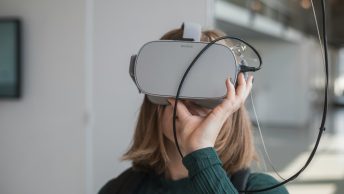
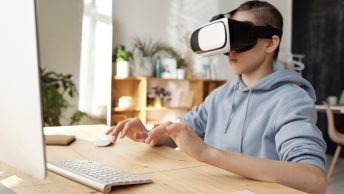
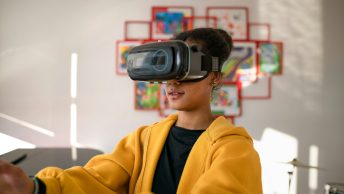
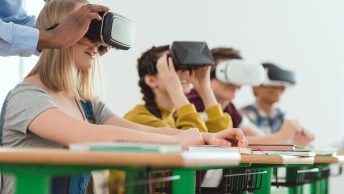
Virtual reality (VR) is changing how students experience and learn about science. The traditional way of learning from textbooks and diagrams transforms into a more interactive and immersive experience that is exciting and encourages deeper understanding. Imagine students exploring the inside of a volcano or walking through the solar system—all from the safety of their classroom.
Learn how VR can take your science projects to the next level!
Exploring VR as a Tool for Science Projects
Understanding VR technology and how it fits into classrooms can unlock new learning possibilities. Virtual reality allows students to explore environments and scenarios they wouldn’t typically experience in a classroom setting. From geological tours to exploring ecosystems, VR makes learning immersive and exciting. Imagine taking a field trip to the moon or diving deep into the ocean without leaving the classroom. These experiences can deepen understanding and make abstract concepts more tangible.
The benefits of VR in scientific inquiry are vast. Students engage more when they can experience rather than just read about scientific phenomena. It encourages curiosity and allows them to explore “what if” scenarios in a safe environment. VR can simulate real-life experiments, showcasing results and consequences instantly, which helps kids grasp complex scientific theories more intuitively.
Here are some exciting examples of VR projects:
– Walking on Mars: Students can use VR to experience the Martian surface and learn about the planet’s geography and atmosphere.
– Investigating Cells: VR enables an up-close look at cellular biology, showing how cells function and interact.
– Weather Watching: Simulate weather patterns to understand climate changes and weather phenomena like hurricanes or tornadoes.
Setting Up a VR-Enhanced Science Classroom
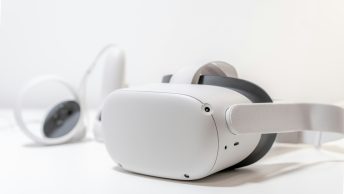
The first step is choosing the right VR equipment and software. Several VR headsets and applications have been designed for educational purposes, offering wide-ranging interactive experiences. When selecting these tools, it’s important to consider the age group and subjects being taught. Popular options include headsets that blend intuitive controls and kid-friendly software.
Preparing a safe and productive VR environment is crucial. Allocate a dedicated space in your classroom where students can move around safely while wearing VR headsets. Clear the area of obstacles to prevent accidents. Establish rules and guidelines to ensure students understand how to handle equipment respectfully.
Integrating VR with traditional learning materials enhances the educational experience. Pairing VR lessons with textbooks and hands-on activities solidifies learning. For instance, a VR tour of a chemical lab can be followed by actual classroom experiments. Students benefit from different teaching modalities, which cater to various learning styles and reinforce knowledge through multiple channels. Combining these approaches can make lessons more engaging and improve long-term retention.
Designing Interactive Science Experiments in VR
Creating a virtual lab environment allows students to engage with science in fun and educational ways. In a virtual lab, students can conduct experiments without the limitations of physical resources. They can mix chemicals, observe reactions, and explore different outcomes safely. This flexibility enables experimentation with scenarios that would be too costly or difficult to replicate in a real-world lab.
Another great use for VR is simulating difficult experiments. For example, replicating dangerous or complex procedures can be done without risking safety. Students can manipulate variables and immediately see the results, providing a deeper understanding of scientific principles. Virtual dissections or complex molecular interactions are now more accessible and less intimidating.
Using VR to visualize scientific concepts helps illustrate processes and ideas that are abstract or invisible to the naked eye. For example:
– Exploring Space: Students can experience the solar system by “traveling” from planet to planet.
– Weather Patterns: Observe and manipulate weather systems to see their environmental impact.
– Ecosystem Dynamics: Dive into a rainforest, observing how species interact and depend on each other.
Encouraging Collaboration and Exploration Through VR
Facilitating group projects with shared VR experiences promotes teamwork and interactive learning. Students working together in a virtual environment can collectively share discoveries and solve problems. This approach fosters communication skills and collaboration since they must discuss and strategize how to achieve their project goals.
Gathering feedback from students is essential to enhancing VR lessons. Educators can adjust their teaching methods by understanding what students enjoy and where they face challenges. Encourage students to express their thoughts through surveys or open discussions, which helps improve the VR experiences.
Inspiring curiosity with VR technology is a key benefit. VR opens doors to endless exploration and invites students to learn more about topics they’re passionate about. Teachers can present VR lessons as starting points, encouraging further research and self-guided learning. Students become more motivated to explore science by showcasing real-world applications and discoveries.
Conclusion
VR technology transforms science education into an engaging adventure, sparking students’ imagination and curiosity. By combining virtual experiences with traditional teaching methods, educators can create a dynamic and effective learning environment. Whether investigating distant planets or diving into microscopic worlds, VR makes learning an unforgettable experience.
Ready to integrate VR into your teaching toolkit? At Teachers Tech, we provide the best productivity apps and guidance to help educators harness the power of technology. Discover how our tools and support can enhance your lessons and inspire your students. Let’s revolutionize science education together!